Thursday, April 9, 2009
It's the Crocodile's turn!
Wednesday, March 4, 2009
Planet Forward: A chance to share YOUR thoughts
Do you have your own thoughts about what America's energy future should look like? A new PBS special called Planet Forward is looking for your ideas in the form of videos, photo essays, commentaries, songs, and salsa recipes (ok, we made up that last one). When the special airs on April 15 (one week before Earth Day), the best submissions will be part of the program.
So if you're feeling creative and/or opinionated, check out the submission guidelines at planetforward.org. Your contribution could be seen on prime-time TV.

Monday, March 2, 2009
As Carl Pope wrote in a recent blog entry: "What a four weeks!" Congress and the Obama administration continue to deliver a steady stream of environmental milestones.
The best environmental good news came in response to economic bad news: The American Recovery and Reinvestment Act contains approximately $80 billion in funding for promoting energy efficiency, renewable energy, and higher-mileage cars.
Specifically, that means:
- $25 billion for energy efficiency
- $20 billion for renewable energy incentives
- $11 billion in grants and $6 billion in loans to modernize the electric grid and increase its capacity to deliver power generated by renewable sources, and
- $17.7 billion for mass transit, Amtrak, and high-speed rail.
The significance of this funding for putting America on the path to a clean-energy economy can't be overstated.
The Obama administration also checked off another item from the list of "Clean Slate" actions that the Sierra Club suggested before the inauguration, when EPA Administrator Lisa Jackson indicated that the agency will likely change course and begin regulating as pollutants the greenhouse gases that contribute to global warming. (Reconsidering an EPA clean-car waiver to California and other states was the first. See below.)
Then, just this week, a years-long stalemate on mercury emissions appears to have broken after the White House Council on Environmental Quality issued a statement saying, "The United States will play a leading role in working with other nations to craft a global, legally binding agreement that will prevent the spread of mercury into the environment."
Let's hope the good news keeps coming from Washington, D.C.
Yes, lets hope, fingers, toes, and eyes crossed! Just don't try to drive like that.
Saturday, February 7, 2009
No such thing as 'clean coal'
Now take into account the tons of coal slag that gets dumped into creeks and valleys every year, the tons of carbon emitted by coal burning plants and factories. Even if you clean up coal, it's still not remotely clean. That's like saying "Oh, this is clean chalk, though. It doesn't leave white smears on your black slacks, and you never have to cough and choke on chalk dust when you beat the erasers." It just doesn't happen. So do you know what people started doing instead of getting chalk dust everywhere? They switched to white boards and dry erase markers. Ah, progress.
Nowadays most markers are nontoxic, and their components can even be recycled. Why can we do this with markers and not with energy? Simply because people aren't making the effort and the commitment needed. Tell them they need to make a commitment.
Sign the Petition.
Friday, November 14, 2008
Addressing Climate and Economy
Via the Environmental Defense Fund:
You say you want a Climate Action Mandate?
According to an election night national poll sponsored by Environmental Defense Fund that's exactly what the new President has.
The poll found a majority of Americans believe that given the current economic crisis, now is the time to address climate change—because investing in clean energy will create millions of new jobs and rebuild the economy.
The survey, conducted by respected Democratic pollster Douglas E. Schoen, also found that two-thirds of Americans think investments in economic stimulus should be funded with revenue from large companies paying for the global warming pollution they emit—rather than tax hikes or more borrowing that increases the national debt.
A Clear Message
The public thinks there's not a minute to waste. They want economic revitalization and action to address global warming to go together, and they want it paid for by polluters.
A few of the other poll highlights include:
- 78% of voters think it is very or somewhat important to address the problems of global warming and climate change, while 22% do not.
- 35% of voters think it is most important for Congress to pass a plan that creates new jobs by investing in renewable energy projects. This compares with 26% who said expanding health care coverage is most important and 23% who said regulating the financial services industry should be the top priority.
- 50% of voters said that our oil addiction and economic problems are linked and should be dealt with together, compared with 26% who said we must deal with our oil addiction now and only 13% who said we should deal with our economic problems first.
(For full poll results, here is a link to the pdf file.)
It's clear that the public no longer buys the tired argument that economic progress and environmental protection are at odds with one another.
That should serve as a warning to those who plan to try marshaling old scare tactics when the climate debate starts back up in January.
Our single-minded goal for 2009 is to leverage this transformational opportunity into real change.
EDF scientists, economists and policy experts are already deeply engaged in the rapidly evolving conversation.
It's going to be one heck of a year. We'll use regular Transition Report updates to keep you posted.
Thanks for all you do,
Sam Parry
Director Online Membership and Activism
P.S. What do you think? Sound off in the EDF Green Room – our online soapbox for the EDF Action community.
Wednesday, September 24, 2008
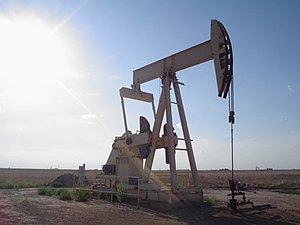
Colorado Oil and Gas industry
GLENWOOD SPRINGS, Colorado - The Colorado Oil and Gas Conservation Commission (COGCC) on Monday tentatively endorsed a rule requiring oil and gas companies to consult with the Colorado Division of Wildlife if they plan to drill in sensitive wildlife areas.
That consultation would identify any conditions companies would have to follow if they operate in certain Colorado wildlife habitat areas, which include locations that provide winter range for elk, mule deer and bighorn sheep.
The conditions would be guided by a list of basin-specific best management practices. Those techniques are expected to be identified during a later stakeholder process.
Oil and gas companies would not have to consult with the DOW under several scenarios, such as if a company drafts a comprehensive drilling plan or if it limits its density.
The commission's decision to approve the consultation rule came after hours of debate that touched on several different sections of proposed wildlife rules. The proposed wildlife regulations have been at the center of controversy surrounding the current rule-making process for the state's oil and gas industry.
Tom Remington, the director of the DOW, said finding the right balance for the wildlife rules has been a "long journey." He added there are issues that will have to be addressed down the road.
However, he said the rules before the commission on Monday were acceptable to the agency.
"We very much support these rules and would encourage you to do so as well," Remington said.
One wildlife rule the commission did not get to on Monday may prohibit companies from conducting activities like construction, drilling and completion, and laying of pipeline in "restricted surface occupancy" (RSO) areas.
Those RSO locations include areas where bighorn sheep reproduce and bald eagles nest. It would also encompass areas within 300 feet of any stream that is home to Colorado cutthroat trout or 300 feet within any stream or lake designated by the DOW as "gold medal."
As with the consultation rule, companies could avoid the RSO rule if they work with the COGCC director, demonstrate that wildlife is not present in the targeted drilling area, gain an exemption from the DOW or develop a comprehensive drilling plan for the area.
Companies could also possibly avoid it if they show that it's not technically or economically feasible to comply with the rule.
Debate over what areas may be tagged with a RSO designation took up a large part of the commission's Monday hearing. Some commissioners wanted to include more riparian areas under the RSO designation.
So far, Colorado's oil and gas commission has given tentative approval to about 82 new rules for the state's oil and gas industry during six hearings in August and last week. Commission members based much of their provisional votes on rule language drafted by agency staff.
COGCC staff began work on the new rules in August of last year. That process began because of legislation the legislature passed last year that required the agency to expand its focus to consider public health and wildlife impacts, and require the use of best management practices to minimize harm from oil and gas development.
Technically or economically feasible to comply? What? So basically, they can just blow off the rules of they say 'oh, I am le'tired, I don't want to go through this whole long expensive process, lets just skip it!' Hum. I think someone needs to go look up the definition of the word 'rule': "a principle or regulation governing conduct, action, procedure, arrangement, etc." As in, rules were not made to be broken.
Monday, September 15, 2008
Striking it rich in North Dakota
I sympathise with the people who are bothered by the boom. I know the feeling. If I lived right smack in the middle of the thirty acres that I love (stole your line, Marty Robbins!) I would still be too close for my own comfort to other people. I loath traffic, the noise and the dust it creates. I don't like to see my small town changing. My biggest issue here is the use of hydrofracturing to reach the oil deposit, and the storage of the oil. I'd like to see an environmental impact report on these subjects. I think I'll go research hydrofracturing.
Tuesday, May 20, 2008
2 Birds, 1 Stone
Clean Energy has the potential to become one of the largest industries in the future, supporting jobs for everyone from computer programmers and engineers, to welders and farmers. Save the planet, and save cash by using renewable energy in your home and automobiles. Sounds like a dream, huh? Let's see if we can make it a reality.
Go to WeCanSolveIt.org and sign the petition!
Tuesday, February 19, 2008
Don't let them build a railyard in our state park, Arizona!
From SaveThePeak.org:
"Picacho Peak State Park and the surrounding areas are in danger. On November 29, 2006, the Pinal County supervisors unanimously voted to revise the general plan, allowing industrial use at the base of Picacho Peak. They gave Union Pacific a green light, encouraging them to purchase just less than 1500 acres of land at the base of the peak to build a mega railroad hump/switching yard. This yard will cover an area that is over six miles long and three miles deep, along the I-10 corridor.
A group of concerned citizens and experts voiced dozens of reasons to stop the rezoning, ranging from the adverse affect to the natural environment to a moderate chemical spill that would shut down I-10 for a minimum of 12 hours. The Pinal County supervisors did not waiver, dismissing the environment and public safety in favor of the slanted report, submitted by Union Pacific, showing economic growth.
This report was not site specific; the rail yard does not have to be built at the base of Picacho Peak for Pinal County to benefit from any potential economic growth. The Picacho Peak site was chosen because of the decrease cost to Union Pacific. In 2006, Union Pacific set an all-time quarterly record, growing 15 percent to $4.0 billion in operating revenue. They can afford to build at another location.
This yard will adversely affect the natural environment and future economic development of Picacho Peak State park area. We need your help to fight this “David and Goliath” battle -- with your support we can convince Union Pacific and the State of Arizona to choose an alternative site that does not destroy our coveted natural resource for generations to come. Click here to send a letter and to post your thoughts.
The decision now lies with State Land and the Governor. Please help preserve the peak for our future generations. Get involved now."
Picacho Peak is truly a land mark in Arizona. I call it 'Draco's Mountain' because for some reason to me I can just imagine a big ol' dragon perching up on that craggy peak. Passing it is a highlight of my trip every time I drive up from Tucson to Phoenix. Don't let the Union Pacific and the government desecrate our State Park! Go to SaveThePeak.org and voice your thoughts now!They want to put a 6x3 MILE railyard here?! (damn blogger pictures aren't working AGAIN. Visit the Gallery!)
Monday, July 23, 2007
Save the Bay, and stop Aerial Gunning
Petitions are flying far and fast this time of year for some reason. Two of note, one perhaps of more interest to my fellow Marylanders (though it should be important to you all!) being a petition from Environment Maryland urging Governor O'Malley to live up to his campaign promise to protect the world's largest estuary, the Chesapeake Bay. The other is a petition from Defenders of Wildlife that may help put a halt to the brutal practice of aerial gunning all together! Both very important goals.
For the Bay, unfortunately, Environment Maryland doesn't seem to have an online petition to sign, and perhaps the due date has passed (I can't find a date anywhere on the letter or envelope!) but there are many other actions you can take from their website to help protect the Bay, our countryside, even the entire country and the entire world. I urge you to check them out!
While their letter cites mostly land development along the Bay as the major threat, my personal vendetta is against the poultry factories. The Eastern Shore of the Free State is checkered with chicken farms and processing plants, and much of the waste from these facilities gets dumped straight into the Bay. The immediate result is probably a feast for blue crabs, but the chicken waste brings with it bacteria, including those that can cause flesh-eating diseases in humans. 40 some percent of the Bay becomes a 'dead zone' every year due to heavy runoff of agricultural and developmental pollutants, and more and more development grows every year. We must tell our government that we "Treasure the Chesapeake" as the license plate says, and we need to protect it!
My second petition would close a loophole in a previous Aerial Hunting law and stop the Alaskan, Wyoming, and Idaho governments from using this cruel practice to decimate their Grey Wolf population. As I've reported before, aerial gunning is the inhumane practice of chasing the animal to exhaustion with airplanes and sometimes helicopters and then shooting them, or shooting indiscriminately from the air. Not very sportsmanlike conduct if you ask me, and people do consider hunting to be a sport! Visit the Defenders of Wildlife website and sign the petition today! The goal is 40 thousand signatures by Labor Day, and we're already a third of the way there!
If nothing pressing comes up in the next week, I plan to recap my Wild Horse article. We're into roundup season now, and it is important to keep on top of things!
Monday, July 2, 2007
Wolves and Polar Bears and prairie dogs? oh my!
All in trouble this month: Southwest or "Lobo" wolves, Polar bears as always, and a funny little rodent you probably never think about: Prairie Dogs.
First the wolves. I've had the privilege and pleasure to meet these creatures up close at the Arizona Sonora Desert Museum outside of Tucson, Arizona, where a staff member invited us to stay a bit past normal closing time, in order to give a howling demonstration. The Coyotes started it off, but the wolves joined in quickly, and the Ravens over in the aviary added their voices as well. To a Raven, Coyote and Wolf talk probably means dinner! I've also seen them in the wild, in New Mexico while visiting family near White Sands. New Mexico Representative (R, of course) Pearce recently attempted to undermine the Southwest Wolf Recovery Program by spreading misleading and often outright untrue information about wolves to his fellow New Mexicans, calling for the termination of the recovery program. Thankfully, he was thwarted! The man actually went so far as to tell people that 'nothing is more appealing to a wolf than the sound of a baby crying.' How outlandish! Everyone knows politicians lie, but really. Despite the recent win for Lobo Wolves, we must remain vigilant that the government continue to support the Endangered Species Act and not allow sensationalism and fantasy sway them.
Meanwhile Polar Bears continue to face threats from every direction...poaching, global warming, habitat loss. For the sake of todays argument I'm not even going to open the Global Warming can of worms. I'm focusing on destruction and disturbance of habitat and LOCAL pollution. Big Oil has been pressing for years to open up arctic wildlands to drilling, lands that include several key wildlife areas, national parks and refuges in Alaska. The Arctic National Wildlife Refuge is the largest wildlife refuge in the United States, and a key denning and breeding habitat for animals from Polar Bears, to Caribou, to migratory birds you
can find in your own back yard! Polar Bears den here, Caribou cross thousands of miles to drop their calves, and Arctic Wolves hunt. Oil company development along the coastal plain would have a drastic affect on all local wildlife, including fish and marine mammals such as the endangered Bowhead Whale living in the Beaufort Sea. To understand the impact of drilling and exploration in the arctic refuge, one only need to look as far as nearby Prudhoe Bay.And last but not least on todays ranting agenda the Prairie Dog. Prairie Dogs get a bad rap. They (as well as numerous other rodents in the mid and southwest) can be carriers of Bubonic Plague, dig holes that old time ranchers will always blame for the breaking of a prize bull or cutting horse's leg, and (heaven forbid!) make use of ranchland that should rightfully belong to cows, ain't that right folks?! There has been noise from many plains states about using poison to destroy up to 2/3 of the prairie dog population in some places. On its own a Prairie Dog might not seem like much. But consider: Prairie Dog's provide food for some of our most endangered small predators, the Black-footed Ferret and the Swift Fox, both of which are currently being managed by recovery programs. If the Prairie Dogs were destroyed, these other key species would also suffer. Also, vacant Prairie Dog burrows are used by Ferrets, Foxes, Owls and snakes, as well as the rodents providing food for other animals such as Coyotes, Bald and Golden Eagles, owls and many species of hawks. The effort to exterminate the Prairie Dog not only highlights the government's serious lack of understanding the impact of its 'management' actions, but costs tax payers billions of dollars a year. Do YOU want to pay for these misguided schemes? I don't!
Visit Defenders of Wildlife and WorldWildlifeFund to find out what you can do to help them in their efforts in these areas. And if you happen to see a Polar Bear, Wolf, or Prairie Dog today tell him I said "Hi! and Good Luck!"
Thursday, February 8, 2007
The Wolf at the door
Now the mountain lion, you'll never see him coming. He attacks from ambush, pouncing from a ledge or hiding within sprinting distance on the downwind side of a trail. The mountain lion is solitary, and it seems to placate people to think that when they have a problem with a mountain lion they can just shoot that lion and the problem is gone. But wolves are pack animals. Even taking out the alphas might not solve a
<-Ain't he go-jus? Whatever it is, its something that the people of North America brought over with them when they came from Europe and Asia. When North America was first settled wolves ranged the entirety of the continent, excluding only the deepest parts of the south. Before they were protected in the 1960's they were trapped and killed nearly to extirpation (or local extinction, as there were still plenty of wild wolves in Canada, Alaska, and parts of Europe) with as much as a 14 dollar bounty on their heads. Early trappers didn't much care what else they killed either, and some used poison laced carrion (usually strychnine) which could kill fifty wolves in one night, not to mention the ravens, coyotes and other scavengers it attracted. Sometimes the poison seeped into the ground and even poisoned the grass, long after the carcass was gone, and deer and elk would die. Long after that the bones of the dead animals might be chewed by another, and it too might die. By the time wolf recovery came around wolves were holding out in a very small population in northern Minnesota, but had been otherwise removed from the lower 48 states. Today helped in part by Defenders of Wildlife's program which reimburses ranchers who lose stock to depredation wolf populations in the two main reintroduction sites in Yellowstone Natl. Park and Idaho are well up, and I'm proud to be a member of their "Adopt a wolf pup" program. I've also adopted a Bison, but though I am heartened that wolves have once again begun hunting their most fearsome natural prey in Yellowstone, I hope my wolf pup and my bison never meet!
So what is to stop the Grey Wolf from spreading further? Habitat encroachment for one. Game Hunting for another. In Alaska and Canada its still legal to hunt or trap wolves, but not so in the lower 48. So aside from wolves killed through the 'lethal control' plan which eliminates stock killers and other potential problem animals, wolves have to deal with human hunters sharing their food source. Only to the average human hunter it isn't a food source, is it? Its just a pretty rack of antlers to hang on the wall. I've actually had someone spot my 'adopt a wolf pup sticker' and read me the riot act about how wolves kill elk, which rightfully belong to human hunters. Right buddy. There ARE people who still hunt for food. And for them I'm sorry if Mr. Wolf got there first. But before we go shooting wolves for killing elk, why don't we say...limit hunting licenses for SPORT hunter's first? I mean, my god, what would you poor big game hunters do if you couldn't go out and kill something? Maybe play a video game. Try Deer Hunter. As for those of you out there who appreciate our wolves, I urge you to go to the Defenders of Wildlife's 'take action!' page and help stop them from exterminating wolves in the lower 48, and stop the barbaric aerial gunning in alaska! We still need 100,000 actions for halting aerial gunning to reach our goals!
This is a beautiful calender featuring wolves! Brought to us by CreaturesGreatandSmall
Who could say no to a pupkiss? Lovely framed art tile, or search for other wolf designs at DCR Images!
Tuesday, February 6, 2007
Vancouver Cougars
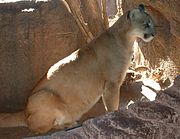
Flipping channels the other day I ran across a special on the National Geographic channel I believe it was, called "Hunter/Hunted" about the rising number of cougar attacks on humans and domestic pets in that area. Now I didn't catch the entire show, so I'm not sure what the exact statistics are, but basically there have been more attacks in the past 5-10 years than there were previously, despite the fact that the cougar population on the island is half of what it was 10 years ago. Now, you can say simple habitat encroachment by humans and their pets is to blame, and that would probably be partly true, but that's not the whole reason. The root of the problem? Clearcut logging.
In past years vast swaths of the island's forest had been denuded, and the resulting change in habitat had changed the balance of animal life in the forests. More open areas meant more inviting places for deer and larger prey animals to roam and graze. Higher numbers of prey animals naturally meant higher numbers of predators, which is why the cougar population estimate for that era was somewhere around 800. But then the forest started to close in on those cleared areas, prey species lost their habitat, starved, or moved to another area, and cougars started getting hungry. With the decrease in prey came a decrease in predators, but there were still too many to feed and the new forest with its scanty undergrowth didn't even seem inviting to the smaller prey animals. Cougars had to find something to eat, or die, and cougars don't give up their lives or their habitat easily. I imagine if I was a cougar I'd think a Pomeranian looked like a right nice little snack, too.
Featured on the show were three cats with different bad habits, one starving yearling who resorted to eating neighborhood kitty cats to survive and had a den far too close for comfort to human habitats; that cat was tracked down and shot. As far as I can recall the other two had gotten away, one attacking and biting a little girl, though even the family admits that the cat was most likely after the puppy, and another who mauled a mountain biker who was out after dark.
Mind you I certainly don't condone such behaviour, and any animal caught attacking humans or domestic animals certainly needs to be dealt with. But how can you blame a wild animal for simply being wild? I was heartened to learn that neither of the human victims featured in the special held a grudge against their attacker. They understood that they were in the cougar's domain, and the cougar was just doing what cougars do. As the special said, WE are the ones who